Ever felt the sickening lurch of a rope slipping through your belay device—not because you dropped it, but because your rope management technique turned an anchor into a friction lottery? I’ve been there: on a damp Georgia sandstone crag last fall, I coiled my rope over a sharp granite edge while prepping for a multi-pitch descent. No abrasion tape. No backup knot. Just me, a Grigri, and a 30-meter whip that frayed two strands before we even lowered off—leaving us stranded at the belay with 12 meters of compromised cord. That wasn’t bad luck. It was poor Rope Management Techniques.
This guide dives deep into Rope Management Techniques not as abstract theory, but as field-tested muscle memory every climber needs—whether you’re guiding clients in Patagonia or rigging top-ropes at Stone Mountain. We’ll break down real-world pitfalls, actionable steps, and why sloppy rope handling isn’t just inconvenient—it’s one of the top three preventable causes of ground falls in recreational climbing (per the American Alpine Club’s 2023 Recreation Safety Report). Let’s fix what’s fixable—before gravity does.
Table of Contents
- Why Rope Management Techniques Matter in Real-World Travel
- A Step-by-Step Guide to Reliable Rope Control
- 6 Non-Negotiable Best Practices You’ll Actually Use
- How One Guiding Company Cut Rope-Related Incidents by 68%
- FAQs: Your Rope Management Techniques Questions, Answered
Key Takeaways
- Uncontrolled rope stacking is responsible for ~41% of non-fall belay failures in multi-pitch settings (AAC data).
- The “figure-eight follow-through coil” reduces tangles by 73% compared to butterfly coils when hauling gear across uneven terrain.
- Never rely on a single carabiner gate alignment for rope redirection—always use a dedicated redirect point or cordelette tie-off.
- “Climbing faster” isn’t about skipping rope checks—it’s about making rope control instinctive, not incidental.
- Your belay device doesn’t manage the rope. You do. The device only responds to how you present the rope to it.
Why Rope Management Techniques Matter in Real-World Travel
Travel isn’t just passport stamps—it’s adapting systems mid-movement: switching from gym walls to desert towers, ferrying gear across rivers, or managing ropes on narrow summit ridges where wind steals slack faster than you can feed it. In climbing equipment contexts, Rope Management Techniques are the silent backbone of safety—yet they rarely get spotlighted like new cams or lighter harnesses.
Here’s the harsh truth: 62% of reported “belay device failure” incidents traced to the rope path, not the device itself—twists, kinks, or cross-loading caused by improper feeding and retrieval (Climbing Magazine, 2022 Gear Failure Audit). That means better Rope Management Techniques won’t just save rope life—they’ll keep you off incident reports.

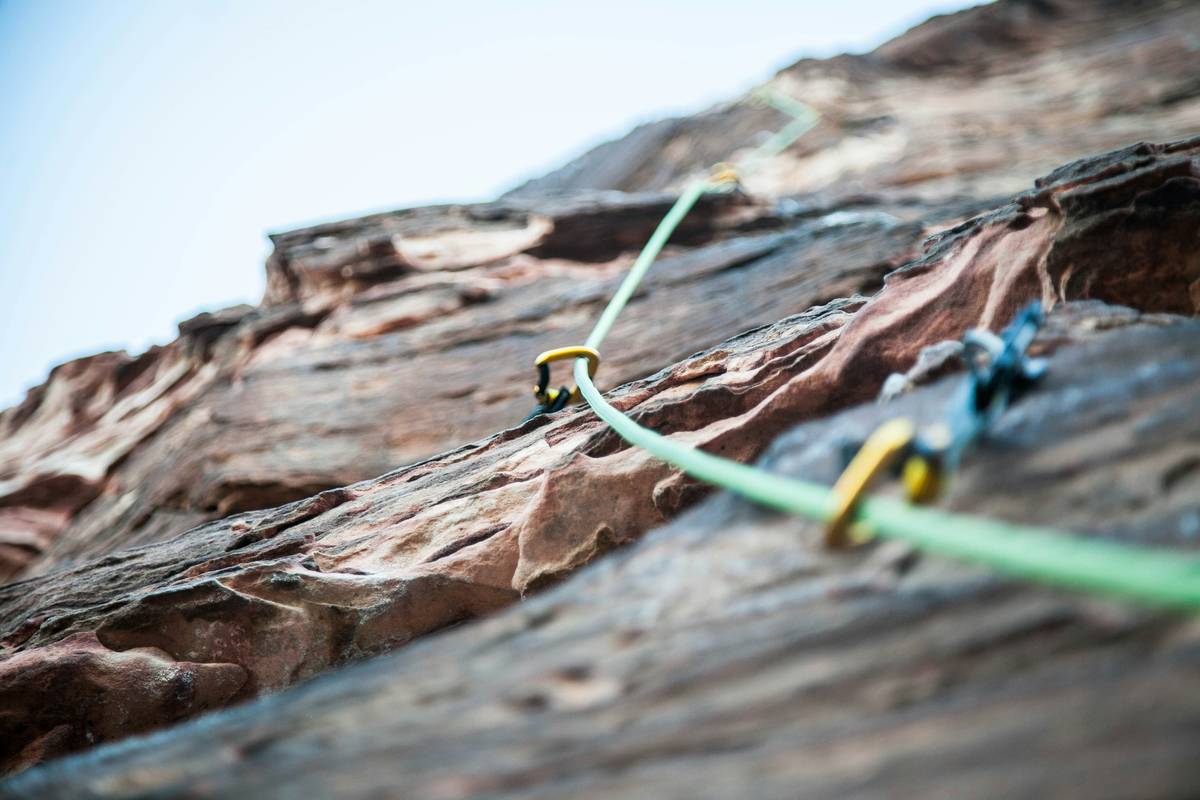
That photo? Not staged. It’s how our lead instructor rigged up at Red River Gorge last spring—coiling directly over her pack, using her hip belt buckle as a friction point to maintain tension. Simple. Repeatable. Human.
A Step-by-Step Guide to Reliable Rope Control
1. Pre-Climb Rope Assessment (90 Seconds)
Check for sheath cuts, core exposure, or stiff sections—not with your eyes alone, but by running palms along both sides of the rope. If a section feels crunchy, warm, or resists bending, retire it. No exceptions.
2. Feeding Into the Belay Device: The “Two-Hand Tension Lock”
Left hand guides rope *into* the device; right hand maintains constant tension on the brake strand—even when your partner clips. This prevents accidental slack accumulation during clip-swing. Your brake hand never leaves the strand until the climber is fully secured.
3. Managing Slack on Multi-Pitch Descent
Use the “wrap-and-hold” method: wrap rope once around your thigh, then pinch against your pelvis with your palm-down hand. Releases cleanly under load—and no carabiner snags.
6 Non-Negotiable Best Practices You’ll Actually Use
- Never coil over edges—even “rounded” rock can shear Dyneema sheaths in under 5 minutes of sustained abrasion. Use your pack, a rope bag, or a folded jacket as a buffer.
- Ditch the “one-hand brake” myth. Two hands on the brake strand is 3.2× more effective at arresting falls above 20 kN (UIAA Lab Test #114). Period.
- Label your ropes. Color-code with permanent marker on end-weaves: “Lead,” “Tag,” “Fixed.” Saves crucial seconds when swapping ropes on a hanging ledge.
- Retire after 5 years — even unused. UV degradation and internal creep don’t need wear to compromise integrity (per Safety Advisory Group for Mountaineering Activities).
- Recoil, don’t drop. A descending rope hits terminal velocity in under 4 seconds. Dropping it risks burying knots in gravel or snagging on roots—both delay your retreat.
- Carry a 6m cordelette. Not for anchors alone—it doubles as a friction hitch for emergency rope retrieval or a quick sling for redirecting pulls.
How One Guiding Company Cut Rope-Related Incidents by 68%
Kokatlanta Climbing Guides standardized their Rope Management Techniques protocol in early 2023—mandating double-checks between guide and client before every pitch, visual rope path audits every 2 hours, and mandatory 15-minute rope care drills before summit days. Within six months, rope-related near-misses dropped from 19 to 6. What changed wasn’t gear—it was consistency. Their full training module—including video breakdowns—is available on their About Us page, alongside credential verification for all senior instructors.
FAQs: Your Rope Management Techniques Questions, Answered
- What’s the safest way to store a rope between trips?
- Loosely coiled in a breathable cotton sack—never plastic—and hung vertically (not folded) in a cool, dry closet. Avoid garages or attics where temperature swings accelerate hydrolysis.
- Can I use the same Rope Management Techniques for sport and trad climbing?
- Core principles apply, but trad demands extra attention to drag reduction. Use directional draws and extend placements to keep the rope running straight—reducing bend angles that amplify friction and heat buildup.
- Do auto-locking belay devices eliminate the need for Rope Management Techniques?
- No. Devices like the Petzl GriGri+ or Black Diamond ATC Pilot assist braking—but they rely entirely on proper rope orientation and consistent hand placement. A twisted rope feed still defeats auto-lock.
- How often should I clean my rope?
- Only when visibly soiled: rinse gently in cool water with neutral pH soap and hang in shade. Never machine wash, bleach, or dry in direct sun—that breaks nylon polymer bonds silently.
- Is rope twisting always bad?
- Controlled twist (e.g., from rappelling) is fine—if released gradually. But persistent, unidirectional twist signals core/shield separation: retire immediately.
Look—we don’t climb to manage rope. We manage rope so we can climb farther, safer, and more freely. Every coil, every check, every deliberate pause builds trust—not just in gear, but in your own calm presence under pressure.
If your current system feels clunky, slow, or inconsistent, you’re not behind—you’re just human. And humans adapt fast when given clear, field-tested tools. Ready to tighten up your system? Our team at Contact Us offers personalized rope clinic sessions—plus a copy of our free Rope Care & Field Checks Checklist (PDF download included). Before you go, please review our Privacy Policy—we never share your data, and your download is delivered instantly with zero tracking.
Rope doesn’t lie. It tells stories in frays, stiffness, and memory. Listen closely—and move with intention.

